Next-generation Communications Research Center From PEARL to 6G Satellite Networks Establishing Strategic Leadership in Next-Generation Communications
In 2025, the global communications industry stood at a critical turning point. There was the transition from 5G to 6G and the expansion from terrestrial networks into Non-Terrestrial Networks (NTN). At this critical juncture, the Next-generation Communications Research Center achieved significant milestones. From the successful decommissioning of the first-generation PEARL satellites to advancements in second-generation inter-satellite links (ISL) and the international recognition of its core 6G algorithms, these accomplishments went beyond technical progress. They embodied the strategic foundation through which Taiwan reclaimed a defining role in shaping the future of global communications standards.
Building a Spaceflight Heritage for Taiwanese Enterprises
Since its inception in October 2021, the primary objective of the PEARL Project has been to build a spaceflight heritage for Taiwanese enterprises. To gain the trust of the international aerospace supply chain, it is essential to show that domestic satellites can operate reliably in orbit.
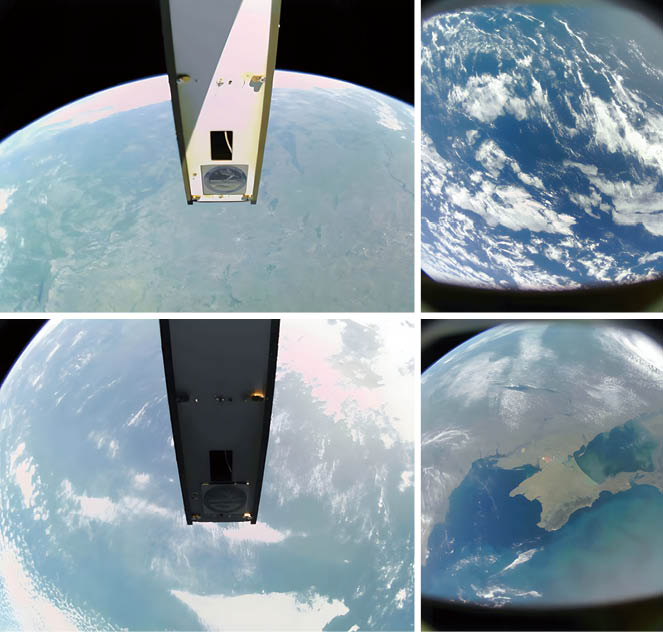
The first-generation PEARL satellites were 6U XL CubeSats, each about the size of a backpack and weighing approximately 8.8 kilograms. Launched aboard a SpaceX rocket on November 11, 2023, they executed a series of in-orbit missions, from Launch and Early Orbit Phase (LEOP) operations to the successful deployment of solar panels. Both PEARL-1H and PEARL-1C remained in orbit for about two years and two months. Notably, PEARL-1H completed 12,151 orbits around the Earth while the ground station successfully sent and executed 4,701 commands.
These two satellites successfully demonstrated attitude control, subsystem health monitoring, and the collection of ionospheric parameters. These data are critical for understanding how equipment ages and evolves under the extreme conditions of space. Influenced by Earth’s gravity, atmospheric drag, and heightened solar activity during the solar maximum, PEARL-1C re-entered the atmosphere on December 9, 2025, while PEARL-1H completed its mission over the South Pacific on January 12, 2026. Together, they enabled Hon Hai Research Institute to accumulate valuable end-to-end experience that spanned pre-launch integrated testing, in-orbit operations, and orbital decay.
| Time | Mission |
|---|---|
| Phase 1: Project Initiation and System Development | |
| Oct. 2021 | Project officially initiated; entered the System Design Review (SDR) phase. |
| Oct. 2021 – June 2023 |
June 2023: Completion of Preliminary Design Review (PDR), Critical Design Review (CDR), and subsystem module development. |
| Apr. 2023 | Launch service contract signed, confirming the launch schedule and service provider. |
| May 2023 | Communication license applications submitted to the National Communications Commission (NCC) and other agencies. |
| June 2023 | Satellite assembly and testing; completed integration testing from individual units to the flight model. |
| Phase 2: Testing, Integration, and Rocket Launch | |
| July 2023 | Thermal vacuum and vibration testing conducted at the Taiwan Space Agency (TASA) to simulate the harsh space environment. |
| Sep. 2023 | Mechanical integration of the satellite and deployer completed. |
| Nov. 11, 2023 | Key launch date (UTC). |
| Nov. 13, 2023 | Successful ground communication; confirmed stable command transmission and reception by the ground station. |
| Nov. 28, 2023 | Obtained NORAD ID 58265 from the North American Aerospace Defense Command, officially entering the space tracking registry. |
| Phase 3: Mission Execution and Completion | |
| Dec. 2023 | Launch and Early Orbit Phase (LEOP); detumbling control and health status monitoring conducted. |
| March 14, 2024 | Solar panels deployed; full-power operation mode initiated. |
| March 15, 2024 | First photography mission; Earth imaging and selfie imaging verification completed. |
| 2024 - 2025 | In-orbit missions executed; ionosphere parameter collection and high-frequency communication tests conducted. |
| Jan. 12, 2026 | Orbital decay: The satellite re-entered the atmosphere due to atmospheric drag, successfully completing its mission. |
Building upon the success of the first generation satellites, the Center pivoted its entire focus to the second-generation PEARL project in 2025. While the first generation focused on Earth-to-satellite communication, the core mission of its successor is the Inter-Satellite Link (ISL). By upgrading from the first generation’s 1T1R (one-transmit, one-receive) architecture to a Ka-band 2T2R system, the satellite is transformed from an isolated node into an active network participant. It can now connect directly with satellites in similar or differing orbits, laying the critical groundwork for future mega-constellations.
The second-generation PEARL also integrates an S-band control system. By leveraging the broader bandwidth and enhanced stability of the S-band, it significantly improves the reliability of control commands. In addition, it is equipped with advanced perovskite solar cells and a Compact Ionosphere Probe (CIP). Currently, the PEARL-1A and PEARL-1B satellites have entered the functional integration testing phase, with launches planned for the second quarter of 2026.
Defining the Strategic ISL Architecture
In addition to physical satellites, the Center also developed two simulation software tools in 2025: OrbitCraft for top-level constellation architecture and BeamCraft for underlying network layout.
Low Earth Orbit (LEO) satellites travel at speeds of up to 7.5 kilometers per second, meaning a single satellite passes over Taiwan in a mere 6 to 8 minutes. How, then, can uninterrupted, full-time coverage be achieved? The answer lies in precise constellation orbit design. OrbitCraft simulates how various orbital parameters affect coverage. For low-latitude regions such as Taiwan, designing constellations with specific orbital inclinations can optimize satellite contact frequencies. In addition, OrbitCraft can calculate the number of visible satellites from mega-constellations such as OneWeb or Starlink as they pass over Taiwan, providing a scientific basis for evaluating the island’s communication resilience during wartime or natural disasters.
The distance between a satellite and the ground changes continuously. Because it is shortest at the zenith and longest near the horizon, satellite spot beams must be dynamically adjusted. BeamCraft addresses these variations by optimizing coverage based on orbital altitude and beam width, making it particularly well-suited for the high-gain phased array antennas demanded by future 6G networks.
A Three-Pronged Approach for 6G and LEO Satellite Technologies
In the field of 6G research and development, the Center has generated 45 high-impact research outcomes, including five top-tier journal papers and 34 conference papers. The Center has strategically positioned itself across three focus areas:
First, Integrated Sensing and Communication (ISAC) is widely regarded as the most anticipated feature of 6G. The Center has pioneered a Vehicle-to-Everything (V2X) sensing architecture based on Orthogonal Time Frequency Space (OTFS) modulation. By utilizing existing communication signals to detect objects, Roadside Units (RSUs) can monitor vehicle movement without the need for additional hardware. Furthermore, the Center’s proprietary A2RMMP algorithm reduces computational time by roughly 30% to 40% compared to existing estimators.
Quick Glossary
Satellite Contact Frequency
Satellite-to-ground connectivity depends on orbital altitude and type. Given their high speeds, LEO satellites pass over a single geographic point several times daily, with contact windows lasting from a few minutes to more than ten.
Second, the Center actively promotes the concept of AI-enabled communications, embedding cutting-edge artificial intelligence algorithms into satellite systems and 6G development. By implementing federated learning, individual satellite nodes can collaboratively train models without exchanging raw data. This approach safeguards data privacy and security, conserves costly inter-satellite communication bandwidth, and optimizes energy efficiency across the constellation, ultimately extending the operational lifespan of the network.
Third, to address the physical layer challenges posed by the high-speed transit of LEO satellites, the team has applied deep reinforcement learning techniques to develop a self-learning synchronization and coding mechanism. Even in complex multi-user communication environments, this mechanism effectively mitigates frequency offsets and maintains precise signal synchronization.
In satellite communications, Doppler shift remains a formidable challenge. Given the extreme orbital velocities of satellites, high-frequency signals undergo severe drift. To counter this, the Center has developed a high performance Doppler compensation algorithm that stabilizes downlink signals while simultaneously enhancing positioning accuracy.