Cross-Domain Intelligence: Power of Strategic Convergence
By partnering with academic institutions, Hon Hai Research Institute demonstrates how cross‑disciplinary collaboration can move from theory to practice. We bring AI, semiconductors, communications, and quantum technologies into real‑world settings. Through repeated validation and refinement, we foster scalable, deployable technologies to shape Taiwan’s innovation for the future.
-
 City University of Hong Kong Artificial Intelligence Research Center
Advancing Cross-Domain AI Reasoning and Learning
As artificial intelligence moves beyond the laboratory to the unpredictable realities of autonomous driving and flexible manufacturing, it no longer faces standardized datasets. In the real world, AI must navigate an environment defined by sensory noise, extreme weather, and unpredictable behavior. To overcome these challenges, the City University of Hong Kong (CityU) and the AI Research Center have engaged in deep collaboration to develop next-generation agents capable of uncertainty reasoning and low-energy continual learning.Read More -
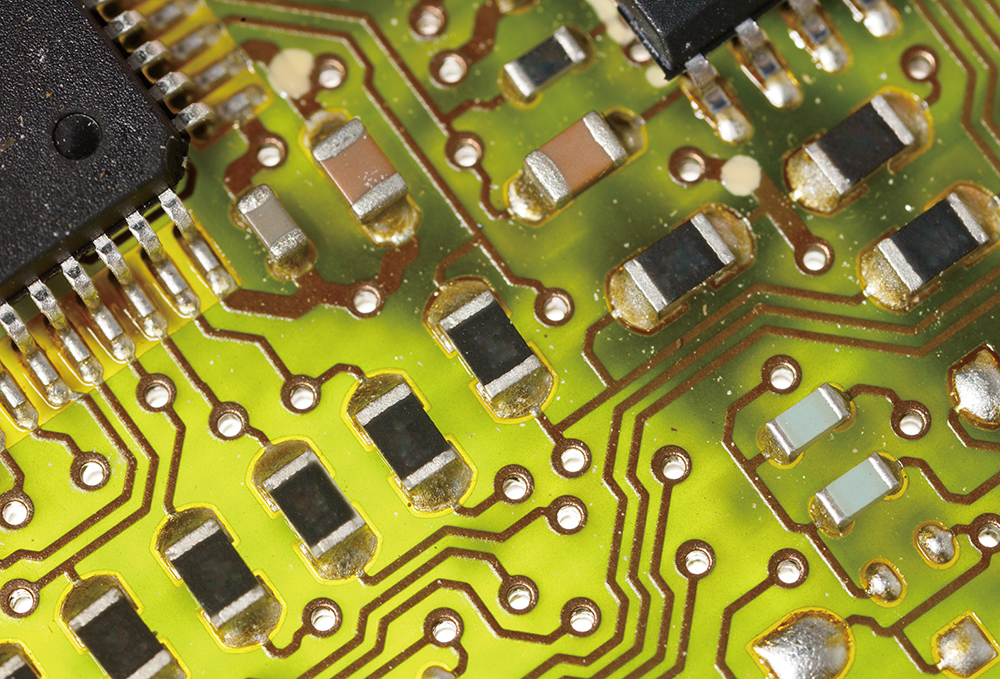
NYCU Semiconductor Research Center
Reshaping Data Transmission Architecture for the AI Era
As demand for AI computing power grows at an almost exponential rate, the semiconductor industry faces a formidable physical bottleneck. While computing engines (GPUs/XPUs) accelerate like high-performance supercars, the data transmission pathways connecting them remain as congested as narrow one-way streets.Read More -
National Central University Next-generation Communications Research Center
Building Taiwan’s Space Autonomy
This is a story where academic vision meets industrial ambition. Inside the laboratories of the Department of Space Science and Engineering at National Central University (NCU), the flickering red and green lights of precision instruments illuminate the faces of young students. Dozens of kilometers away, researchers at the Hon Hai Research Institute are strategizing ways to advance Taiwan’s communications capability from terrestrial networks to the Low Earth Orbit (LEO) environment, 500 kilometers above the Earth’s surface.Read More -
 NYCU Trapped-Ion Quantum Computing Laboratory
Overcoming Optical Limits with Non-local Metasurfaces
Step into a traditional quantum computing laboratory, and you are immediately met with a dense jungle of steel and glass, an optical table crowded with precision lenses, mirrors, and laser arrays.Read More -
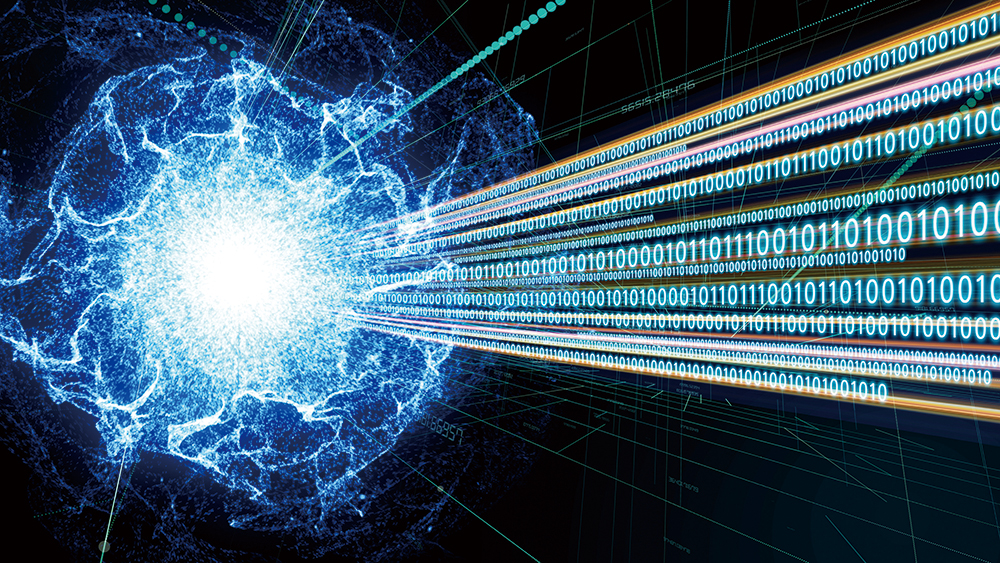 University of Tokyo Quantum Computing Research Center
Defying the Resource Curse: Architectural Innovations in Quantum Computing
In the race toward quantum computing, scientists face formidable challenges. Although quantum computers theoretically surpass classical systems in computational power, the hardware resources and computational overhead required for fault-tolerant quantum computing often grow exponentially with increasing precision requirements.Read More -
City University of Hong Kong Information Security Research Center
Engineering a Resilient Ecosystem for AI Security
As AI and electric vehicle (EV) technologies advance at lightning speed, cybersecurity threats have spread from the virtual into the physical world. To confront increasingly complex attack methods, the theoretical depth of academia must be tightly integrated with the real-world practice of industry.Read More