From the Advisory Committee
Let ideas gradually take shape, let technology push boundaries,together they shape the year’s most powerful moments.
-
 Young Liu, President, Hon Hai Research Institute
以開放精神為世界與產業探尋根本解方
當我談及鴻海的未來,總會強調我們正從「製造的鴻海」邁向「科技的鴻海」。這不是一句口號,而是我們正在執行的藍圖,而鴻海研究院正是驅動這場轉型的核心引擎。它的使命非常明確:為集團儲備未來三年到七年的核心技術。 -
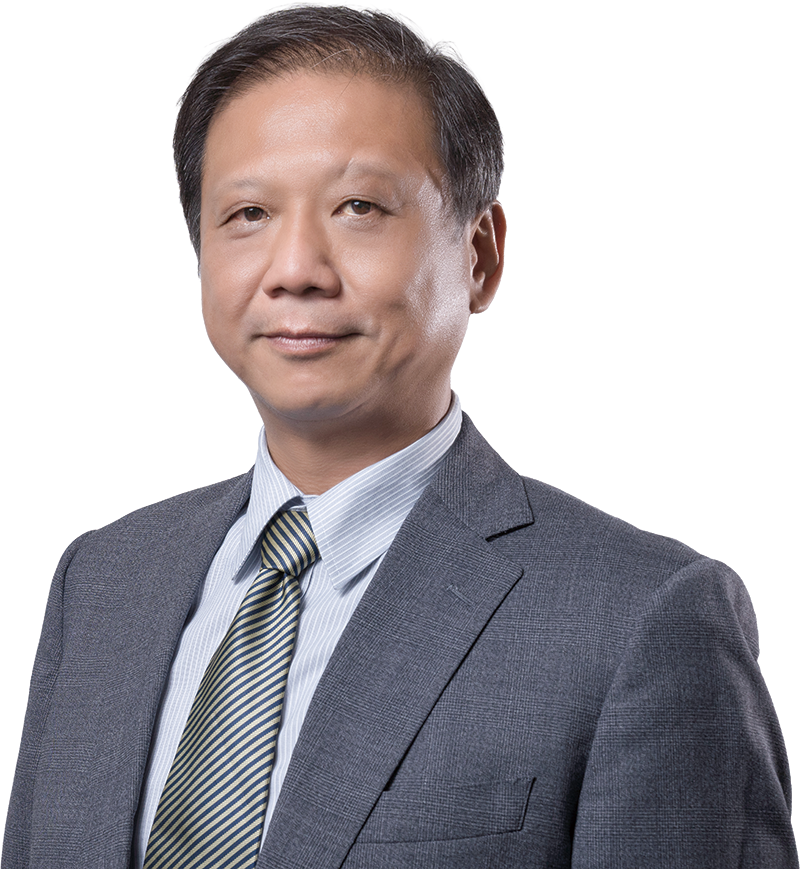 Wei-Bin Lee, CEO, Hon Hai Research Institute
Blazing the Trail: Building the Foundation for Hon Hai’s Technological Future
Since its inception, the Research Institute has carried the core mission of driving the Group’s strategic transformation and evolution. Beyond its function as a technical research unit, the Institute stands as a cornerstone of the Group’s 3+3+3 strategy. In an era defined by rapid technological progress and industry changes, our role is to begin exploration before technologies mature and to identify new directions before markets take shape. As our corporate flagship advances, the Institute serves as its vanguard, scouting the technological frontier and paving the way for the industrial landscapes of tomorrow. -
 Kai-Fu Lee, Chairman of Sinovation Ventures and CEO of 01.AI
When AI Truly Understands the World From Technical Evolution to Outcome-Driven Organizational Transformation
In its early days, robotics advanced slowly because machines relied on rote commands and often failed when confronted with unfamiliar situations. In recent years, however, breakthroughs in world models have equipped AI with physical intuition and common sense. By simulating the outcomes of actions in advance, AI now functions as the brain of a robot, enabling it to navigate real-world environments with human-like adaptability. This breakthrough paves the way for fully autonomous production and personal assistants to become a reality. -
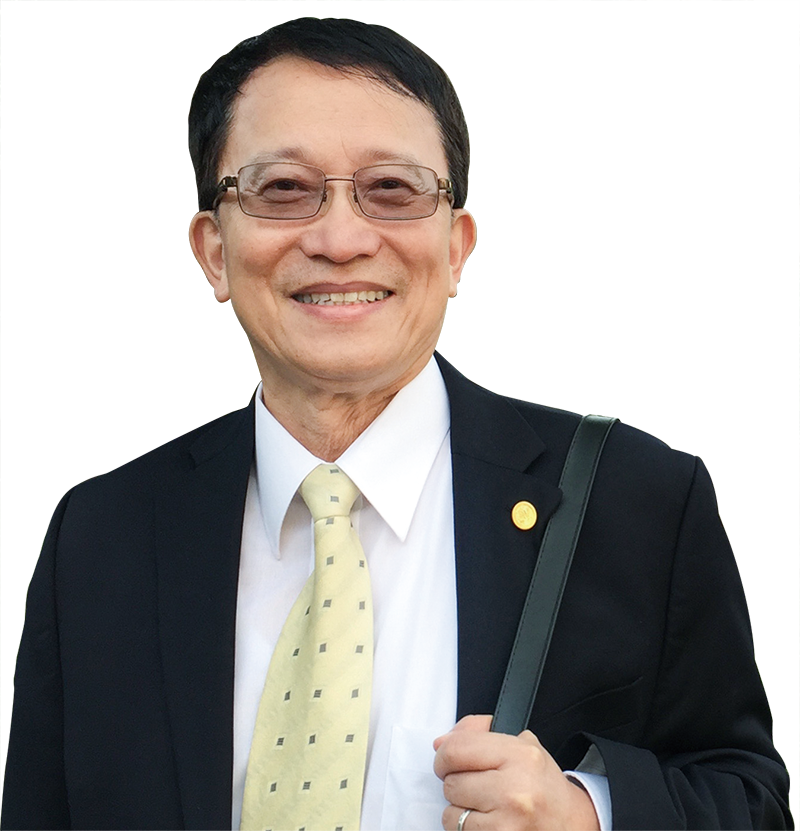 Mau-Chung Frank Chang, Distinguished Professor, Department of Electrical and Computer Engineering, UCLA
Beyond Moore’s Law A New Semiconductor Landscape Shaped by Glass Substrates and Heterogeneous Integration
With Moore’s Law reaching its limits, heterogeneous integration has become mainstream in the semiconductor industry. By combining materials with vastly different properties into a single package, engineers are overcoming the physical limits inherent in monolithic substrates. Notably, the most significant breakthroughs are expected to come from material innovations in packaging substrates. -
 Distinguished Professor, Department of Physics, National Taiwan University
Director, Quantum Information Center, Chung Yuan Christian University
Chairman, Taiwan Association of Quantum Computing and Information Technology Ching-Ray ChangThe NISQ Era Driving a Practical Revolution with Qubits
Quantum technology is at a critical juncture, transitioning from scientific research into engineering development and industrial application. While businesses widely expect 2027 to be a pivotal commercial turning point, progress must be assessed based on hardware maturity. -
 Tzong-Chen Wu, Distinguished Professor, Department of Information Management, National Taiwan University of Science and Technology
Trust and Resilience in the AI Era Building Zero‑Trust Defenses from Edge to Supply Chain
At this historic turning point marked by the rapid rise of generative AI and the advancement of quantum computing, deepfake technologies and automated attacks have left traditional perimeter defenses increasingly inadequate. Breakthroughs in quantum technology also directly threaten the existing foundations of digital trust. As a member of the advisory committee, I must emphasize that trust and resilience are the absolute cornerstones for enterprises to survive amid these dual threats of disruption. In this context, building a Zero Trust defense that spans edge computing, supply chains, and post quantum cryptography (PQC) has evolved from a technical option into an unavoidable operational strategy. Zero Trust is not merely a pursuit of rigid, absolute security; rather, it is a high‑level risk‑management framework whose core lies in empowering enterprises with highly sensitive anomaly detection and robust risk‑control capabilities. -
 Wan-Jiun Liao, Distinguished Professor, Department of Electrical Engineering, National Taiwan University
Building Intelligent, Energy‑Efficient, and Resilient Networks in the 6G era
As global communications transition from 5G toward 6G, the core network design philosophy is undergoing a fundamental paradigm shift. 6G is no longer defined by a mere linear performance improvement in bandwidth, speed, or latency. Instead, it represents an overall evolution toward networks that are intelligent, resilient, and sustainable. Within this framework, key technologies such as AI-native networks, Non-Terrestrial Networks (NTN), semantic communications, and Integrated Sensing and Communications (ISAC) are collectively shaping the development of next-generation communication systems.